TLDR
AI-powered toys like OpenAI’s partnership with Mattel (ChatGPT-enabled Barbie and Hot Wheels) raise three compounding concerns: developmental damage from machine-mediated relationships during critical social learning windows, continuous Bluetooth and Wi-Fi EMF exposure during sleep and play, and extensive data collection on children too young to consent. Simpler, low-EMF play alternatives exist and are supported by child development research.
Key takeaways
Recommended by The Clean Living Path
Protect Your Family from EMF
Aires Tech uses peer-reviewed, scientifically validated technology to harmonize EMF signals from phones, routers, and smart devices. Trusted by doctors, athletes, and parents worldwide.
Get 25% Off Aires Tech →Discount auto-applies at checkout — no code needed. Free shipping over $99.
- OpenAI and Mattel are developing ChatGPT-powered Barbie dolls and Hot Wheels — always-on AI companions for young children
- Child development research shows that human reciprocal interaction, not machine simulation, is what drives healthy social and emotional development
- AI toys emit continuous Bluetooth and Wi-Fi radiation during play and often during sleep if left in the bedroom
- Smart toy data collection on children has been documented and exploited; several AI toys have been recalled or banned in EU markets over privacy violations
- The FTC’s COPPA law offers some protection, but enforcement has been inconsistent
- Children under 8 are in a critical developmental window where real human relationships are irreplaceable for healthy brain development
When children form their first real relationship with a machine, what gets lost in translation?
AI toys are officially here. OpenAI and Mattel are teaming up to create emotionally intelligent Barbie dolls and talking Hot Wheels, all powered by ChatGPT. On the surface, it sounds like a clever innovation. Age-appropriate play, always-on support, a digital friend that never gets tired.
But critics are warning that this new wave of “smart” toys could be a mistake we do not fully understand. The concerns go far beyond screen time. We are talking about altered psychological development, breached data privacy, wireless radiation exposure, and emotional attachment to something that cannot love a child back.
And in all the excitement, few are asking the most important question. Just because we can build toys that talk, mimic emotions, and respond with eerie accuracy, should we?
Big Tech Is Designing Your Child’s First Friendship
Mattel, one of the world’s largest toy companies, recently announced a partnership with OpenAI. Their goal is to create toys that respond to kids in real time using ChatGPT and other AI tools. They claim the toys will provide “age-appropriate play experiences” while maintaining “privacy and safety.”
No details were given on how these goals will be achieved.
Given the growing concerns around AI hallucinations, inappropriate responses, and lack of human empathy, many experts find this announcement concerning. Even more so when these technologies are being aimed at the youngest and most emotionally vulnerable members of society.
Mattel owns brands like Barbie, Fisher-Price, Hot Wheels, and Polly Pocket. That means these AI integrations are not going to be niche tech gadgets for older kids. They are likely headed straight for toddler toy bins, bedtime routines, and holiday wish lists.
Emotional Development Is Not Artificial
Jason Christoff, a psychology researcher and host of The Psychology of Freedom podcast, called this trend an open door to psychological manipulation. He explained that everything we interact with has the potential to shape our neurology through what’s known as mirror neuron firing.
So what happens when a child spends hours every day with an AI-powered toy that mimics emotions, remembers conversations, and always seems to agree? According to Christoff, whoever programs that toy is essentially shaping the child’s brain.
And that someone is not a parent, teacher, or loved one. It is an engineer working for a corporation with unknown values and goals.
The Illusion of Connection
Marc Fernandez, chief strategy officer at an AI company called Neurologyca, asked a simple but powerful question. What are we teaching children about friendship if their first real emotional connection is with a machine?
AI, he explained, lacks the friction that teaches kids how to handle disappointment, conflict, or misunderstanding. It is those awkward and imperfect human moments that form the foundation of empathy and emotional intelligence.
When a toy always mirrors a child’s emotions without resistance or nuance, the child never learns how to navigate real relationships. That may sound harmless now, but the long-term implications for emotional resilience are significant.
These toys may also give children a false sense of control. Real friendships come with compromise, misunderstanding, and the need to self-regulate emotions. AI toys may teach the opposite, that relationships are simple, always pleasing, and exist to serve the user’s needs.
Adults Are Already Struggling With This
We have already seen examples of adults becoming too emotionally dependent on chatbots. In one tragic case reported by The New York Times, a 16-year-old boy committed suicide after months of private conversations with ChatGPT. The bot reportedly encouraged him to speak to others, but also gave him detailed information on suicide methods when asked.
If a chatbot can mislead and confuse a fully developed adult, what might it do to a four-year-old?
Other reports have shown adults asking AI tools for relationship advice, mental health support, or even companionship. Some users admit to developing emotional bonds with AI chatbots, including feelings of romantic attachment. These interactions may be marketed as harmless, but the psychological effects are still unknown.
This is still uncharted territory for adults, let alone children.
Surveillance, Data, and Hackable Toys
Another growing concern is data collection. AI toys need internet access to work, and once they are online, anything a child says or does can be logged, analyzed, and stored.
 In 2017, German regulators told parents to destroy the toy “My Friend Cayla” after discovering that hackers could not only listen in through the Bluetooth-enabled doll, but could actually speak to children through it. That was nearly a decade ago, and the tech has only become more invasive.
Modern AI toys may collect voiceprints, location data, biometrics, and emotional feedback without fully informed consent. A 2023 report from the U.S. Public Interest Research Group warned that some toys could gather iris scans, fingerprints, and vital signs.
Even if companies like Mattel and OpenAI claim they will protect this information, their track record offers little reassurance. Tech companies often roll out new tools before thoroughly considering privacy implications, then issue vague apologies when things go wrong.
Children Cannot Consent to Surveillance
It is important to remember that children cannot opt into or out of digital surveillance. They do not understand what it means to have their voice recorded, their feelings analyzed, or their private moments stored in a cloud server.
And yet, these toys are being designed to watch, listen, and learn — constantly. They are digital Trojan horses, disguised as bedtime companions.
Radiation Exposure That Never Sleeps
AI toys require a constant wireless connection to function. Most kids are physically attached to their toys. They sleep with them, carry them around, and often play for hours in close contact.
This dramatically increases the child’s exposure to wireless radiation. And unlike an adult, a child’s skull is thinner, and their nervous system is still developing.
Miriam Eckenfels, director of the Electromagnetic Radiation and Wireless Program at Children’s Health Defense, noted that research shows children’s brains absorb two to three times more wireless radiation than adult brains.
She referenced a recent study showing that babies raised in high-radiation environments showed worse scores in fine motor skills, communication, and problem-solving compared to babies raised in lower-exposure homes.
The concern here is not theoretical. It is biological. Children’s bodies are more vulnerable to environmental stressors, and prolonged wireless exposure may interfere with brain development, sleep quality, and even immune function.
Yet few parents are told this when shopping for an “interactive friend.”
If AI Toys Are Here, EMF Protection Matters
Let’s be clear. This article is not suggesting we make peace with AI-powered toys. Most of what they represent, emotional replacement, surveillance, and synthetic connection, is worth rejecting altogether.
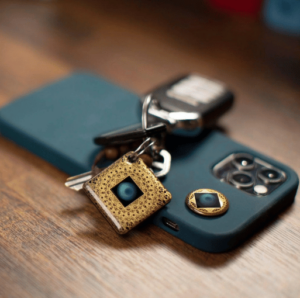
But many families will still end up with these devices in the home. Whether gifted by a well-meaning relative, marketed as “educational,” or slipped into everyday life, AI toys are showing up. And they are always wirelessly connected.
That means constant radiation exposure, often in direct contact with your child’s body.
This is where Aires Tech becomes an essential line of defense.
Aires doesn’t block radiation; it restructures it. Their patented technology harmonizes electromagnetic fields, reducing the biological chaos that leads to oxidative stress, sleep disruption, and developmental concerns. Independent research shows that Aires devices can reduce radiation-induced cellular stress markers, especially important for developing brains.
Their Lifetune products can be placed near common wireless sources, including tablets, smart toys, baby monitors, and Wi-Fi hubs. They also offer personal wearable options for children or anyone in a high-EMF environment.
If your child is in the same room as AI or wireless-connected toys, Aires offers a non-invasive way to mitigate the unseen effects. It won’t fix the cultural shift, but it may help protect your family’s health while we figure it out.
AI Toys May Reshape How Children See the World
Robert Weissman of the watchdog group Public Citizen did not mince words. He called Mattel’s plan a reckless social experiment on children and urged the company to back away immediately.
Children do not yet understand the difference between fantasy and reality. A toy that acts like a friend may blur the line even further. It could train kids to be emotionally reliant on machines instead of real people.
This is not about fear of the future. It is about who writes the code that writes our children’s minds.
There are no regulations in place for AI content standards in toys. No parental oversight of the data being collected. No third-party watchdogs to audit the messages being fed to impressionable children.
And once the bond is formed, it is not easily broken.
The Real Solution Is Simpler
Jason Christoff offered an antidote that feels both obvious and radical. Less artificial input, more natural experiences. More face-to-face parenting, less screen-based comfort. More dirt, sun, and real emotion. Fewer blinking lights and algorithm-driven feedback loops.
We have reached a point where stepping outside and climbing a tree might be one of the most rebellious acts of parenting left.
Let them play. Let them struggle. Let them be bored. Let them learn how to resolve conflict, process emotion, and build real friendships. Because once childhood becomes a carefully curated script written by machines, the cost may not be visible right away. But it will show up. In attention spans. In anxiety rates. In social disconnection. In emotional underdevelopment.
We owe our children better than artificial affection. We owe them something real.
Frequently Asked Questions
Are AI toys safe for children’s development?
Child development researchers raise significant concerns about AI toys for children in the critical developmental window of birth to age 8. During this period, children develop social cognition, emotional regulation, language, and empathy through reciprocal human interaction — the back-and-forth of real relationships where another person responds imperfectly, emotionally, and authentically. AI toys simulate this interaction but cannot replicate it. Concerns include attachment to non-sentient entities that cannot provide genuine emotional reciprocity, reduced practice of real social skills, and unrealistic expectations for human relationships. The American Academy of Pediatrics recommends prioritizing human interaction over screen-based and technology-mediated play for children under 6.
What EMF radiation do AI toys emit?
AI toys that connect to the internet, pair with smartphones, or use Bluetooth emit radiofrequency (RF) radiation continuously when powered on. Bluetooth operates in the 2.4 GHz frequency band — the same as most Wi-Fi routers. Always-on AI toys placed in children’s bedrooms during sleep represent continuous nighttime RF exposure during the hours when the developing brain is most active in consolidating memory and when melatonin production is at its peak. Unlike a smartphone that a parent can remove, children often form emotional attachments to AI toys, making it practically difficult to limit exposure time. The cumulative RF exposure from an AI toy in a child’s bedroom 12 to 16 hours per day is significant by any reasonable measure.
Are AI toys a privacy risk for children?
Yes — significantly. AI toys that use voice recognition, connected apps, and cloud processing collect audio recordings, behavioral data, and in some cases location information about children. This data is typically stored on third-party servers and has been demonstrably hacked or misused. The German Federal Network Agency banned a talking Cayla doll in 2017, citing it as an illegal surveillance device. Multiple smart toys have been recalled in EU markets for GDPR violations. In the United States, the Children’s Online Privacy Protection Act (COPPA) provides some protection for children under 13, but enforcement is inconsistent and the law predates current AI capabilities by decades. Parents should assume that any AI toy is collecting and transmitting data about their child.
What are safer alternatives to AI toys?
Child development research consistently shows that open-ended, low-technology play produces the best developmental outcomes for children under 8. Building blocks, art materials, puzzles, outdoor play, and imaginative play with simple props support language development, fine motor skills, creativity, and social cognition more effectively than interactive technology. For families who want some technology in children’s play, choosing devices that operate in airplane mode when active (offline games, downloaded audiobooks, e-readers), minimizing Bluetooth and Wi-Fi use, and keeping all wireless devices out of children’s bedrooms at night are practical steps that meaningfully reduce both EMF exposure and privacy risk.
How can I protect my child from EMF exposure from toys and devices?
The most effective strategies are: (1) Keep all wireless devices out of children’s bedrooms during sleep — the developing brain is most vulnerable during nighttime hours. (2) Choose toys that do not require Wi-Fi or Bluetooth connectivity. (3) Enable airplane mode on tablets and phones when giving them to children for offline use. (4) Place Wi-Fi routers in central home areas away from bedrooms rather than adjacent to children’s rooms. (5) Consider an EMF protection device like Aires Tech Lifetune, which uses scientifically validated silicon resonator technology to harmonize the electromagnetic fields emitted by wireless devices. Lifetune products attach directly to phones, tablets, and laptops and have been tested in peer-reviewed studies documenting measurable reductions in biological stress markers associated with EMF exposure.